Mixing-Machine Condition Monitoring — ITB Thesis
My electrical engineering thesis with Paragon Technology and Innovation: sensing hardware and a cloud pipeline that monitor the 7.5 kW induction motors driving factory mixing machines, classify vibration severity and recommend maintenance. Ranked in the top three engineering designs of the department.
- engineering designs in the Electrical Engineering department
- Top 3
- engineering designs in the Electrical Engineering department
- operators and maintenance supervisors tested the system
- 23
- operators and maintenance supervisors tested the system
- labelled samples per machine condition
- 490
- labelled samples per machine condition
- validation accuracy: an honest baseline, not a finished result
- 63%
- validation accuracy: an honest baseline, not a finished result
Context
ITB undergraduate thesis with Paragon Technology and Innovation, Jan – Jul 2023. Thesis: "Implementation of Real-Time Monitoring System to Determine Risk Analysis and Machine Condition of Mixing Machine in Factory", with a co-authored paper of the same topic (2023).
Problem
The factory's mixing machines had no condition-based maintenance. The goal was to measure their motors and flag machines at risk before they failed.
Hardware
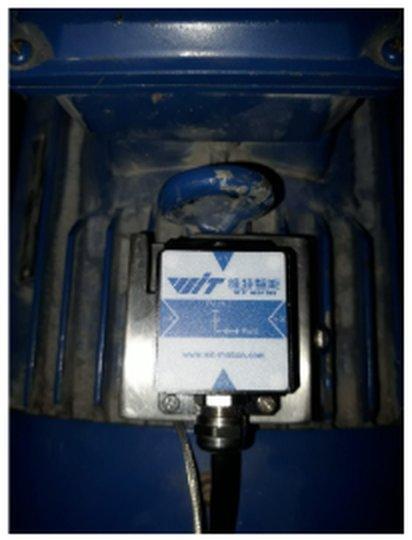
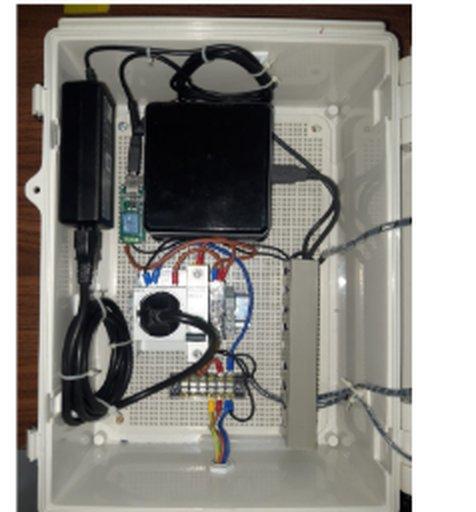
I designed the sensing hardware: accelerometers and PT100 temperature sensors on 3D-printed mounts, PCB layouts, and an acquisition panel and gateway. Motor speed is read from the inverter, and a Raspberry Pi talks to the plant PLC over RS-485.

Data and models
- The edge filters the signals, extracts wavelet features and standardises them against reference data for each machine
- Vibration severity is classified under ISO 10816, with labelled data collected for each machine condition (490 samples per class)
- A vibration-based fault classifier reached 63% validation accuracy. That is modest, and I treat it as a baseline that needs better features and more data
- Anomaly detection and remaining-useful-life estimation ran on Google Cloud Run. The RUL model is a proof of concept, not validated against run-to-failure data
- Results become warnings, maintenance tickets and schedule recommendations in Firebase
People
I validated the requirements with 10 factory engineers and executives, and tested the system with 23 operators and maintenance supervisors.
Reflection
Getting several imperfect signals to agree on one decision that people can trust is harder than training a single model. That is why I am drawn to estimation: a model of the machine, not only a classifier, should tell you what a signal means.